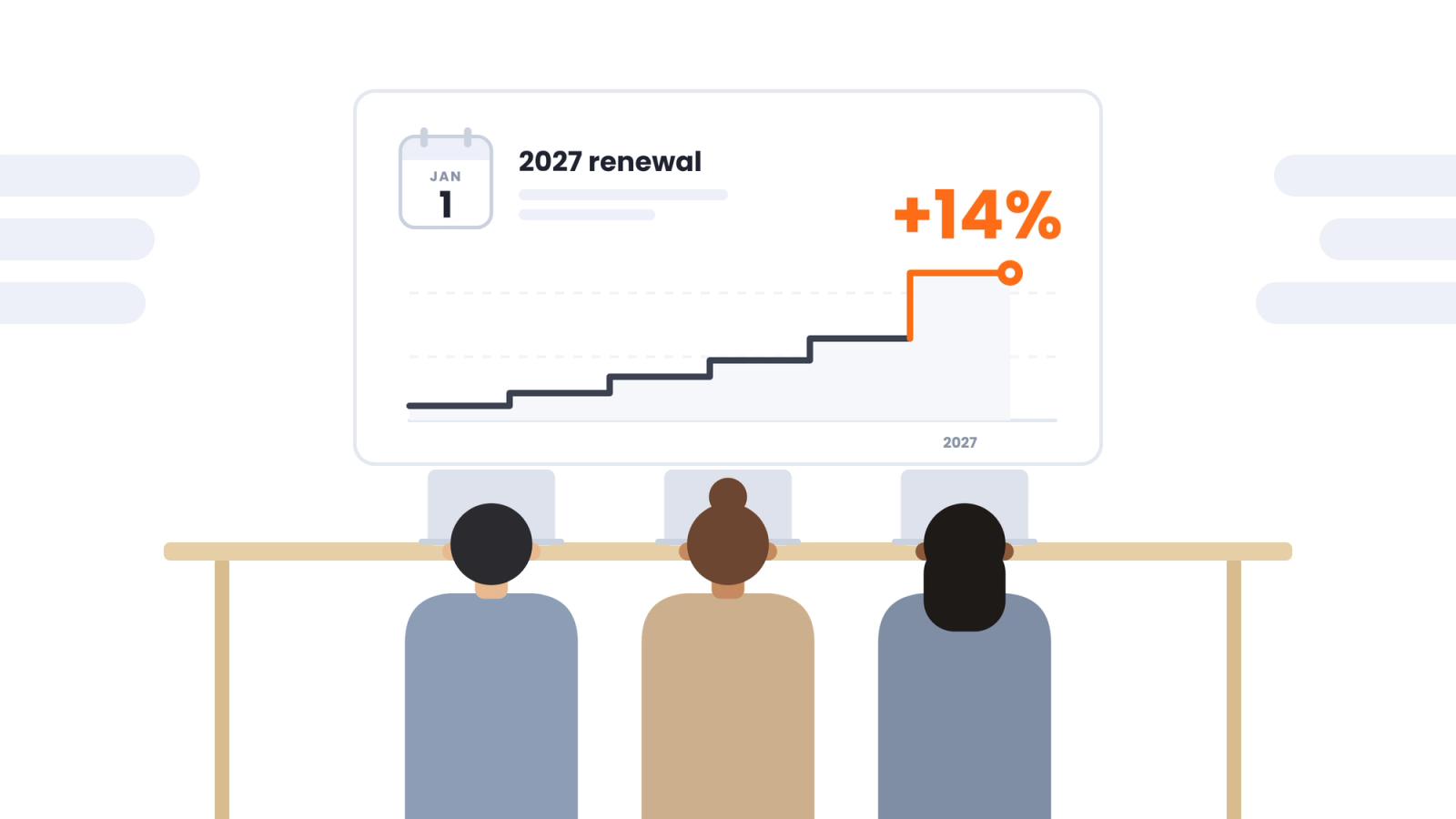
Small group insurers asked for a median 14% increase for 2027. Here's how to tell whether your number is normal, what you can still change, and how much time you have before January 1.
If your plan year starts January 1, your renewal is in your inbox or on its way. It usually shows up as a carrier PDF, forwarded by your broker or PEO with a one-line note: rates are up 16%, let us know if you want to look at options. Most founders read the top number, wince, and sign within the week. Open enrollment is coming, and nobody wants to rethink health insurance in November.
That quick signature is where most of the money goes. The increase on the cover page is priced on one plan, one carrier, and one way of funding coverage. Each of those is a choice you get to make again every year.
On a fully insured small group plan, the rate itself is filed with your state, and no broker can talk it down. What you can change is the plan, the carrier, the funding arrangement, and how the cost is split between the company and your team. On a larger or level-funded plan, the rate is negotiable too.
Is a 14% renewal normal for 2027?
Unfortunately, yes. KFF reviewed proposed 2027 rates from 295 small group insurers across all 50 states and D.C. The median ask was 14%, and six in ten insurers landed between 10% and 20% (KFF).
| Your renewal | Where it sits among 2027 small group filings |
|---|
| Under 10% | Lower than what three quarters of insurers asked for |
| 10% to 18% | The middle half of the market |
| Over 18% | The top quarter. Something specific is usually driving it. |
The top quarter. Something specific is usually driving it.
Those are carrier-wide averages, so use them as a yardstick. Your own number also moves with your team's ages and any plan changes the carrier made.
The wider employer market isn't much calmer. Aon projects employer health costs to rise 9.5% in 2027, pushing the average past $19,000 per employee. It's the fourth straight year of near double-digit increases (Aon).
Why yours might be above the median
- Your team got a year older. Most states price small group plans by each member's age on a federal curve. Turning 31 adds about 2% to someone's rate. Turning 46 or 51 adds about 4% (CMS age curve). A team in its early 30s ages into a point or two a year, while a team with more people in their late 40s feels it much more.
- Your plan was retired and "mapped." Carriers discontinue plans and move you to the closest replacement. The percentage on the cover page can end up comparing two different plans, so check the deductible and out-of-pocket max before you compare prices. HSA plans shift every year too: for 2027, an HSA-qualified plan needs a deductible of at least $1,750 for self-only coverage (Rev. Proc. 2026-24).
- You're level-funded. These plans are priced on your own claims. For a 30-person company, one large claim can move the renewal more than everything else on this list combined.
- You've outgrown small group. In most states, small group means up to 50 employees. In California, Colorado, New York, and Vermont it runs to 100. Past that line, plans are experience-rated and your claims history shows up in the price.
- The small group pool is shrinking. Level-funded arrangements have grown fast (KFF cites a rise from 2% in 2021 to over 11% in 2025), and they tend to pull the healthiest groups out of the regular pool. Fully insured small group enrollment fell from about 17 million people in 2013 to 10 million in 2024. Carriers price that in: one insurer added 1.2% for a riskier pool after its small group enrollment dropped by a third (KFF).
Under all of this sits the cost of care itself. The median insurer in the 2027 filings expects medical costs to rise 10.8%. Individual filings add their own line items on top: one added 2.4% for covering anti-obesity medications, and two added 0.8% each for No Surprises Act dispute costs.
What to check in the renewal packet first
Give the packet 30 minutes before anyone talks about switching carriers. The cover letter has the headline number, and the pages behind it tell you whether that number is even measuring the right thing. If your broker sent a one-page summary, ask for the full carrier renewal.
- Is it the same plan? Match plan names and IDs against this year's. If the carrier mapped you to a replacement, put deductible, out-of-pocket max, copays, and pharmacy tiers side by side before looking at price.
- Is the census right? The renewal is priced on a list of people, their ages, and their coverage tiers. Look for people who have left, dependents who aged off, and recent hires who are missing. A stale census gives you a wrong number and a wrong comparison.
- How is it rated? Age-rated plans price each person by age. Composite plans use one rate per tier (employee, employee plus spouse, employee plus children, family). Composite rates can jump when your tier mix shifts, even if nothing else did.
- What changed in pharmacy coverage? Some 2027 filings drop GLP-1 coverage for weight loss and keep it for diabetes. Others keep it and price it in. If someone on your team relies on one of these drugs, you want to know before open enrollment, not after.
- Are dental, vision, life, and disability renewing too? These often come with two-year rate guarantees. Check which ones expire this cycle, since they get shopped the same way.
- What happens if you miss the deadline? In small group, doing nothing usually means the carrier renews you at the new rates. That's still a decision, just one nobody made on purpose.
Two extra asks if they apply to you. On a level-funded plan, ask for the claims report and where you stand on surplus or deficit. Over 50 or 100 employees, depending on your state, ask for claims experience and the large-claimant report. Both come de-identified, and both are what a new carrier will want to see.
Five moves that change the number
1. Re-market it
Get quotes from other carriers on the same census. Include your current plan design and one or two alternatives. Carriers file their own rates, so the same deductible and copays can price very differently across carriers in the same zip code. If your renewal arrived without a single competing quote, ask your broker why.
A useful re-market fits on one page: your current plan at renewal, the same design at other carriers, and a couple of alternative designs. Everything should run on the same census, with company cost and employee cost shown separately.
2. Change the plan lineup
A lot of startups still offer the one or two PPOs someone picked at 12 employees. Two changes tend to do the most work.
The first is a base plan with a buy-up. The company covers a solid, lower-cost plan in full, and employees who want a richer plan pay the difference through payroll.
The second is adding an HSA-qualified plan and putting money in the account. For 2027, that plan needs a deductible of at least $1,750 for self-only coverage or $3,500 for family, with out-of-pocket costs capped at $8,700 and $17,400. Total HSA contributions, company and employee combined, top out at $4,500 for self-only coverage and $9,000 for family (Rev. Proc. 2026-24).
Here's how the math can look, using round numbers for illustration. Say the PPO costs $780 a month for employee-only coverage and the HSA plan costs $560. That's $220 a month, or $2,640 a year per enrolled employee. Put $1,200 of it into each person's HSA and the company still keeps $1,440 per person. People who use little care come out ahead, and the HSA money stays theirs. People who hit the deductible pay more, which is why the richer plan should stay on the menu.
3. Rework how you split the cost
The renewal percentage applies to the total premium. What the company actually pays depends on your contribution strategy, and that's fully in your hands. Paying a percentage of the base plan and a flat amount toward dependents is common. So is a fixed dollar contribution, which keeps every future increase from landing on the company automatically.
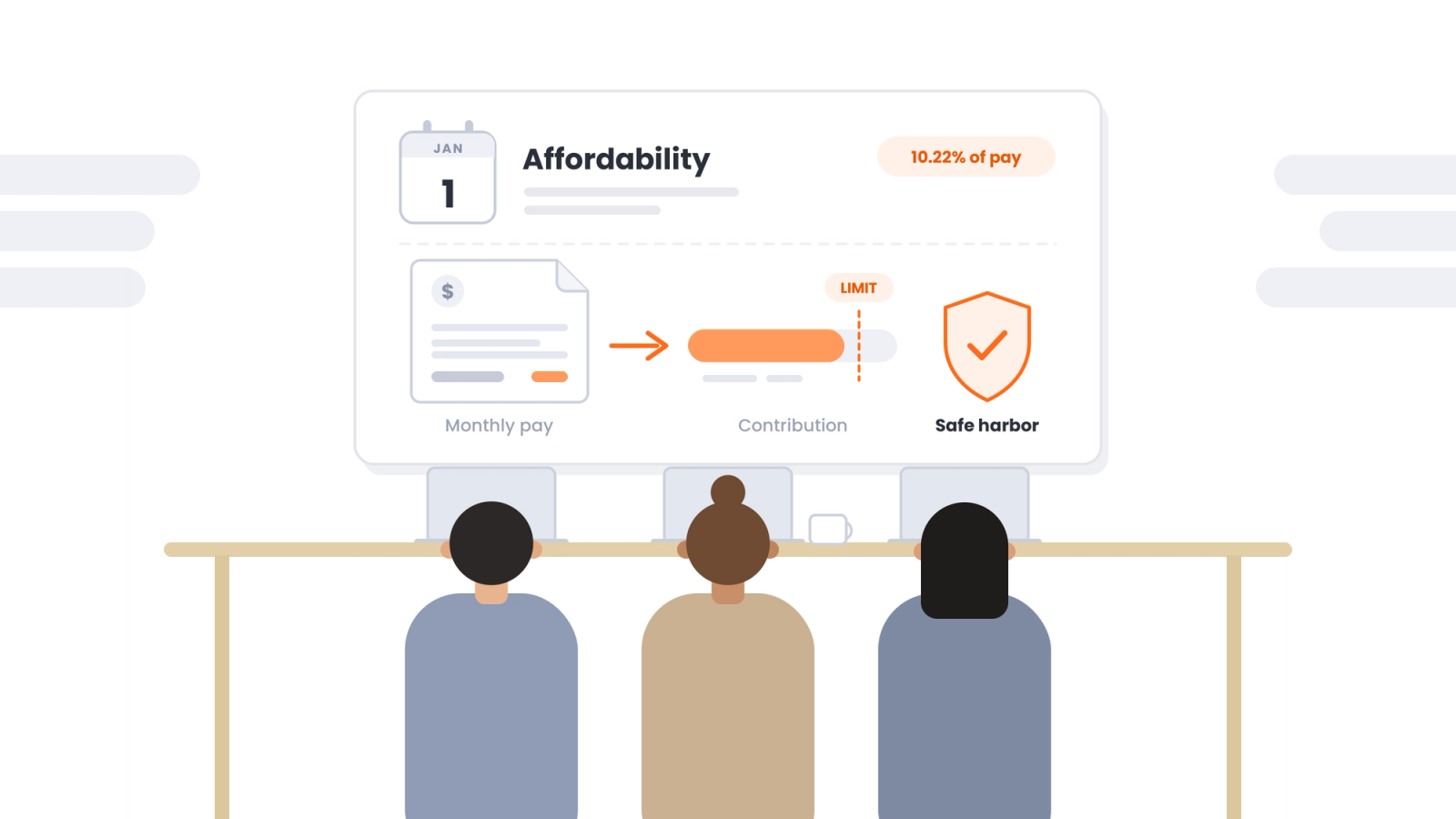
There are floors. Carriers typically require the company to pay at least 50% of employee-only premium and at least 70% of eligible employees to enroll, not counting people who waive because they have other coverage (Leavitt Group). At 50 or more full-time equivalents, the ACA adds another: your cheapest self-only plan can't cost an employee more than 10.22% of household income in 2027, up from 9.96% in 2026 (HUB International). We covered how that threshold works in Crossing 50 Employees.
Shifting cost to employees is the fastest lever and the one people notice most. If you pull it, start with dependent tiers or the buy-up plan, and explain the reason in open enrollment.
4. Reconsider how the plan is funded
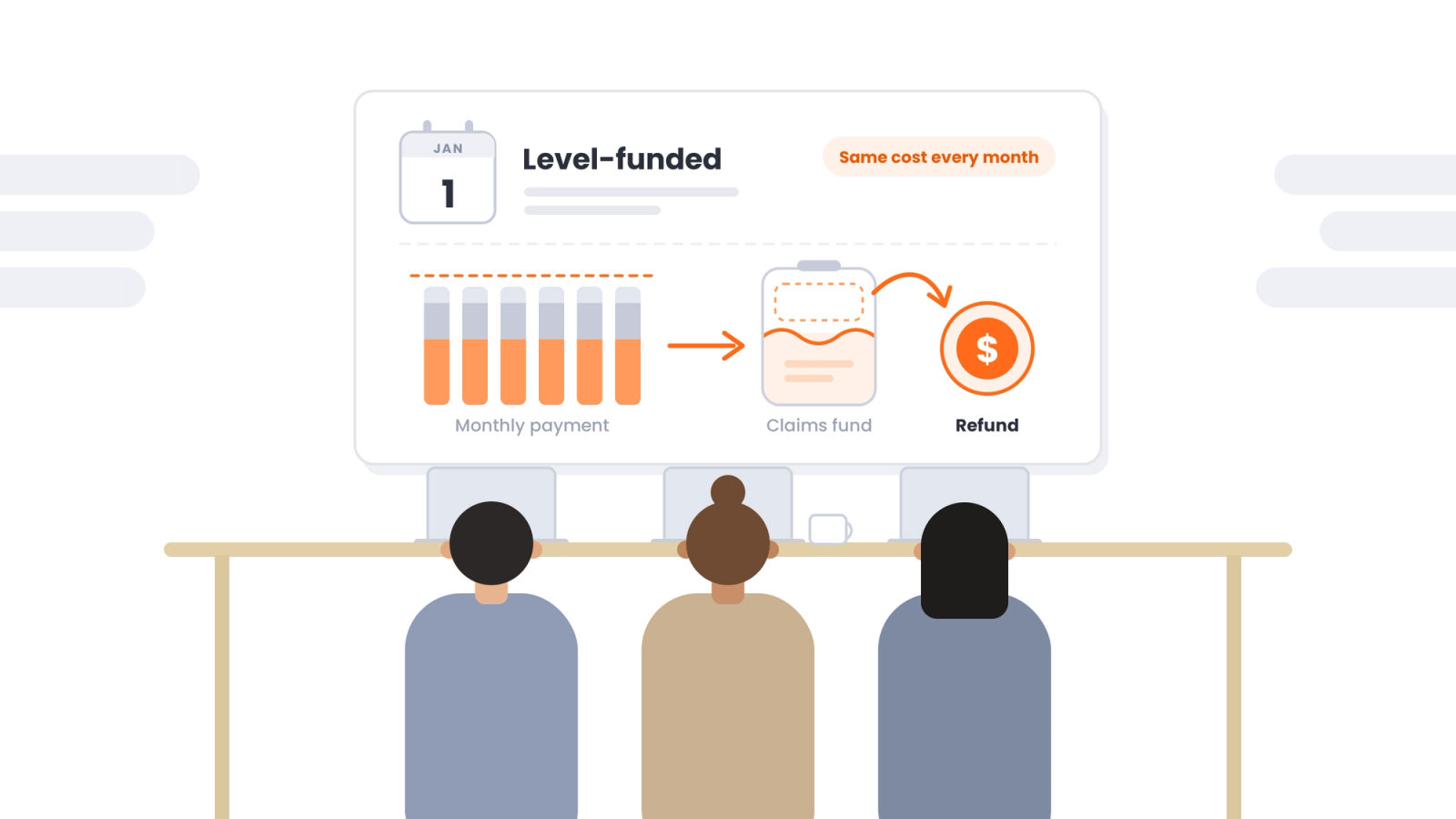
Level-funded plans charge a fixed monthly amount that covers expected claims, administration, and stop-loss insurance for large claims. The carrier underwrites your group, usually through health questionnaires or risk scoring. Young, healthy teams often get priced below the regular small group pool, and some plans refund part of the surplus when claims come in low (Axene Health Partners).
The tradeoff is renewal risk. A bad claims year shows up in next year's price, and nothing like ACA community rating caps the increase. Rules also vary by state, and in some, like New York, level funding is largely off the table for small groups.
The move works in reverse too. ACA small group plans have to accept any group that meets participation and contribution rules, and they can't price on claims. If one bad year blew up your level-funded renewal, going back to a fully insured plan can be the biggest saving available.
5. Change the carrier or the network
Narrower networks (HMOs and EPOs) usually cost less. They work when most of your team lives in one metro and the network includes the doctors and hospitals people already use. Distributed teams usually need a national PPO. Teams spread across many states can also look at an ICHRA, where the company gives each employee a tax-free allowance to buy an individual plan in their own state.
Switching carriers on January 1 doesn't cost anyone their deductible progress, since calendar-year deductibles reset anyway. The real cost is continuity of care. Anyone mid-treatment or pregnant should confirm their doctors are in the new network, and ask the new carrier for transition-of-care coverage if they aren't.
The calendar you're actually working with
For a January 1 plan year, the real deadline is mid-November. Open enrollment needs about two weeks. The carrier needs final elections before the plan starts, and payroll needs new deductions in place for the first January paycheck. Work backward from those and the decision on plans and contributions lands around November 10.
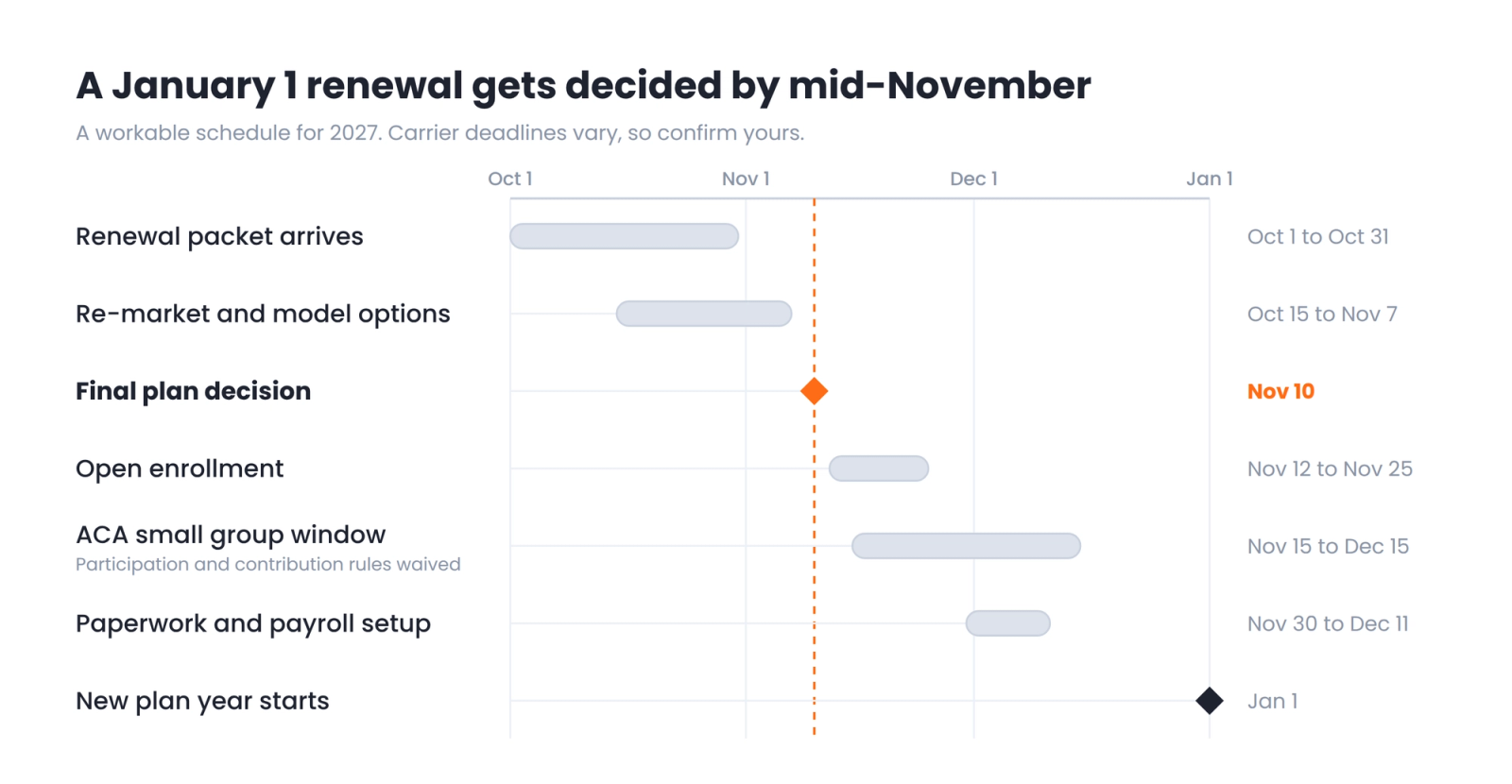
Most of the room to change things sits in October and the first week of November. After that, you're mostly executing.
One federal rule is worth knowing. If you can't meet a carrier's participation or contribution minimums, the carrier still has to offer you small group coverage when you apply between November 15 and December 15, and an application in that window can start January 1 (45 CFR 147.104). Treat it as a safety valve for a small team or a lower contribution. It won't buy you time on anything else.
If you're coming out of a PEO, you're applying as a new group rather than renewing, so start earlier. The PEO Exit Playbook walks through the full 90 days.
Can you switch brokers in the middle of a renewal?
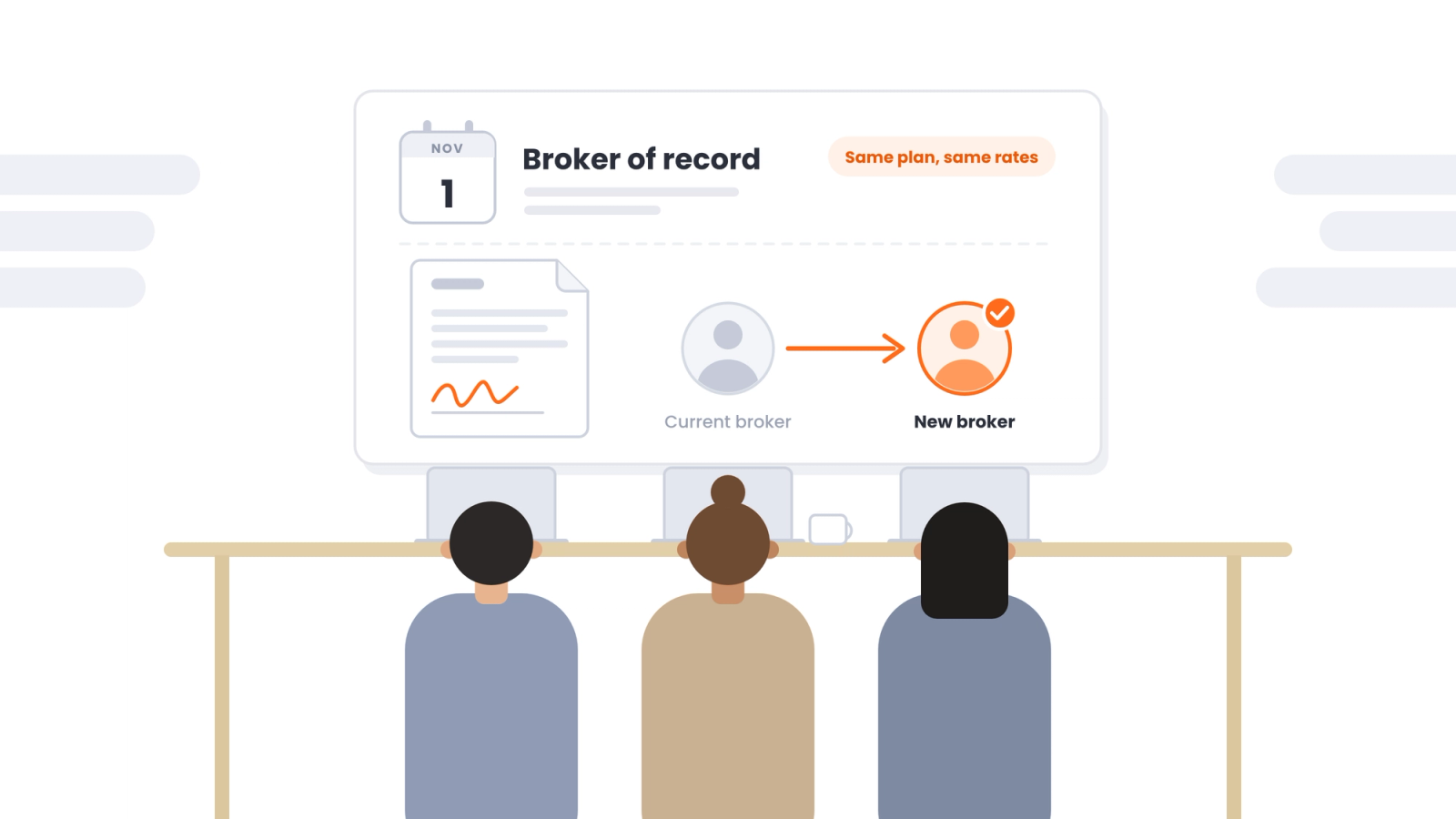
Yes, and October is a normal time to do it. The switch runs on a broker of record (BOR) letter: one page on company letterhead, signed by an officer, telling the carrier which broker represents you. It changes who services the plan and who can pull your renewal and claims data. Your plan, coverage, and rates stay exactly where they are.
Carriers usually take a few days to update their systems. After that, the new broker still has to request plan documents and data, because carriers don't release them automatically (OneDigital). Before you sign, ask the new broker for a date by which you'll see competing quotes. If that date lands after your decision date, the switch won't help this cycle.
The switch also doesn't change what you pay. In small group, the broker's commission is built into the carrier's rates, so every company pays it whether it uses a broker or not (Small Business Majority). Changing brokers only changes who does the work for that commission. It's also how Sdine can be free: the carrier pays us out of commission that's already in your premium.
You're also entitled to see that number. Since December 2021, brokers and consultants who expect $1,000 or more in compensation from an ERISA group health plan have to disclose it in writing, including commissions and bonuses paid by the carrier (Groom Law Group). If you've never seen your broker's disclosure, ask for it.
Two situations work differently:
- You're in a PEO. The PEO holds the master policy, so there's no BOR letter to sign. Leaving means setting up your own group plan, which is a bigger project. PEO vs Sdine: The Real Cost Math helps you decide whether it's worth it this year.
- Your payroll platform is also your broker. Ask how a broker change affects benefits sync and payroll deductions before you sign anything. The plan itself doesn't move, but you want the deductions to keep flowing.
When signing the renewal as-is is the right call
Sometimes the boring move wins. Sign the renewal when one of these is true:
- The increase is under about 10%, the plan didn't change, and the census checks out. Run the re-market anyway. A carrier switch for a few points rarely pays for the disruption.
- Someone is mid-treatment or pregnant, and the alternatives would push their doctors out of network. A few percent is cheap next to that.
- You're level-funded and had a good year. Some carriers only pay out a surplus if you renew with them, so check before you move.
- A bigger change is coming within the year. Maybe you're about to cross 50 full-time employees, hire fast after a raise, or leave a PEO. One clean redesign next year is better than two rushed ones.
Even then, check the census and review the contribution split. Both take an afternoon and catch the most common renewal mistakes.
FAQ
How much will health insurance premiums go up in 2027?
Small group insurers proposed a median 14% increase for 2027, according to KFF's review of 295 insurers. Aon projects total employer health costs to rise 9.5%, to more than $19,000 per employee. Your own number also depends on your team's ages, your plan, and how it's funded.
Can you negotiate a small group health insurance renewal?
On a fully insured ACA small group plan, the rate is filed with the state and can't be negotiated. You can still lower the cost by changing carrier, plan design, funding arrangement, or contribution strategy. Level-funded plans and large group plans (over 50 or 100 employees, depending on the state) can be negotiated directly.
Can I change health insurance brokers before my renewal?
Yes. You sign a broker of record letter, and the carrier usually updates the account within a few days. Your plan, coverage, and rates stay the same. In small group, the commission is already built into your premium, so switching brokers doesn't change what you pay.
What happens if I don't respond to my renewal?
Most small group carriers renew you automatically at the new rates. If your plan was discontinued, you're moved to the closest replacement. Coverage continues, but you've accepted the increase and any plan changes that came with it.
Does switching carriers on January 1 reset deductibles?
Calendar-year deductibles reset on January 1 anyway, so a January 1 switch costs employees no deductible progress. A mid-year switch can, unless the new carrier agrees to credit what people already spent.
What are the minimum participation requirements for small group health insurance?
Carriers typically require about 70% of eligible employees to enroll, not counting people who waive for other coverage. Most also require the company to pay at least 50% of employee-only premium. Groups that miss either rule can still buy coverage between November 15 and December 15 for a January 1 start.
Send us your renewal
If the renewal is already in your inbox, forward it to us with your current census. We'll re-market it, model plan and contribution options against the same census, and tell you if the right move is simply to sign what you have.
If you switch, Sdine becomes your broker of record and takes over from there: the renewal, open enrollment, carrier issues, and employee questions in Slack, on top of Rippling, Gusto, Deel, ADP, or whatever you already run. It's free, because carriers pay broker commissions that are already built into your premium.
Sources
- KFF: How much and why premiums are going up for small businesses in 2027 (Aug 6, 2026)
- Peterson-KFF Health System Tracker: full 2027 small group brief
- Aon: employer health costs projected to rise 9.5% in 2027 (Aug 20, 2026)
- CMS: federal default and state-specific age curves
- Rev. Proc. 2026-24: 2027 HSA and HDHP limits
- HUB International: 2027 ACA affordability percentage, Rev. Proc. 2026-26
- 45 CFR 147.104: small group guaranteed availability and the Nov 15 to Dec 15 window
- Leavitt Group: participation and contribution minimums
- Axene Health Partners: level funding for small groups
- OneDigital: switching benefits brokers before renewal
- Small Business Majority: how brokers are paid
- Groom Law Group: broker and consultant fee disclosure
The Sdine team writes about leaving the PEO, modern benefits, and keeping compliance on autopilot, the AI-native alternative to brokers and PEOs.